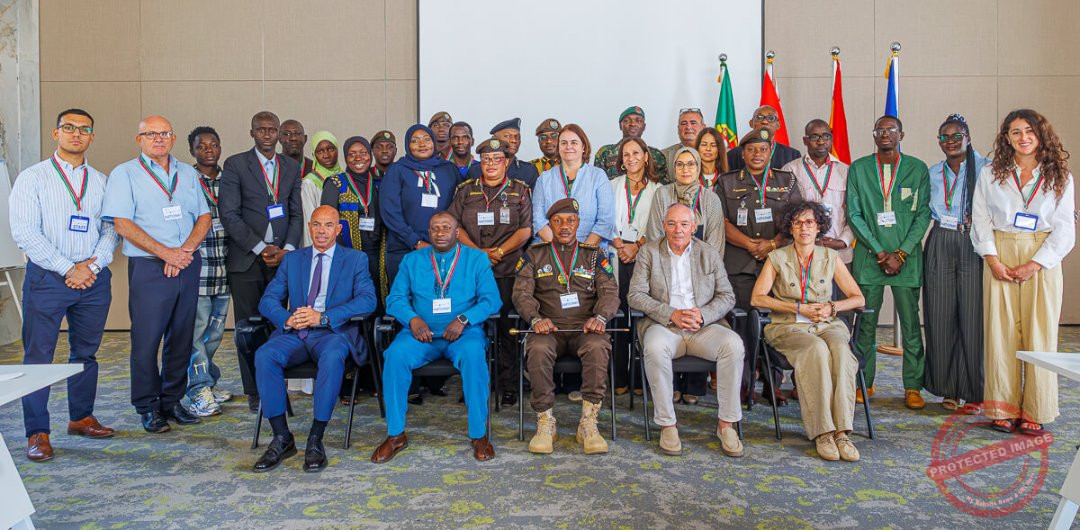


The session was organised as part of the Interreg MAC Programme COMPASS Project, with the objective of mapping out stakeholders in The Gambia who are actively involved in migration management.
The Interreg MAC Programme forms part of the VI-D Madeira-Azores-Canary Islands (MAC) Cooperation Programme, which was adopted by the European Commission on 21 September 2022 under the European Territorial Cooperation Objective (Interreg). The programme includes participation from The Gambia, Mauritania, and Senegal, and is funded by the European Union.
The event brought together key stakeholders from the Ministry of Interior, Ministry of Foreign Affairs, National Agency Against Trafficking in Persons (NAATIP), security services, non-governmental organisations, civil society groups, and the Gambia Red Cross Society. Discussions focused on the realities surrounding migration in The Gambia.
Speaking at the session, Director General Ebrima Mboob highlighted the importance of such engagements. He noted the GID’s progress in migration management, particularly in reducing migrant smuggling. He emphasised the need for an integrated strategic framework that involves the right stakeholders from the planning stage in order to improve operational effectiveness and efficiency. He further stated that the implementation of stronger laws, along with the deployment of appropriate logistics and operational capabilities, will help address key priorities in line with the GID’s strategic objectives.




Assistant Director General Olimatou Jammeh also outlined ongoing challenges, including limited fleet capacity to support operations, the need for improved equipment to enhance border surveillance, and the inadequacy of the current reception centre. She noted that the GID aims to establish a reception facility that aligns with a rights-based approach for migrants.
The Executive Director of NAATIP, Ms Isatou Dabo, highlighted ongoing national efforts to combat transnational organised crime, particularly trafficking in persons and migrant smuggling. She emphasised that strong partnerships and sustainable skills development are essential in addressing the root causes of irregular migration.
The technical assessment session provided a platform for stakeholders to discuss key issues affecting migration management and to define the roles of various institutions in addressing transnational organised crimes.
Did you enjoy this article? Share it with friends >>>


 PREV
PREV











Typically replies within 30 minutes
We will be back soon.


