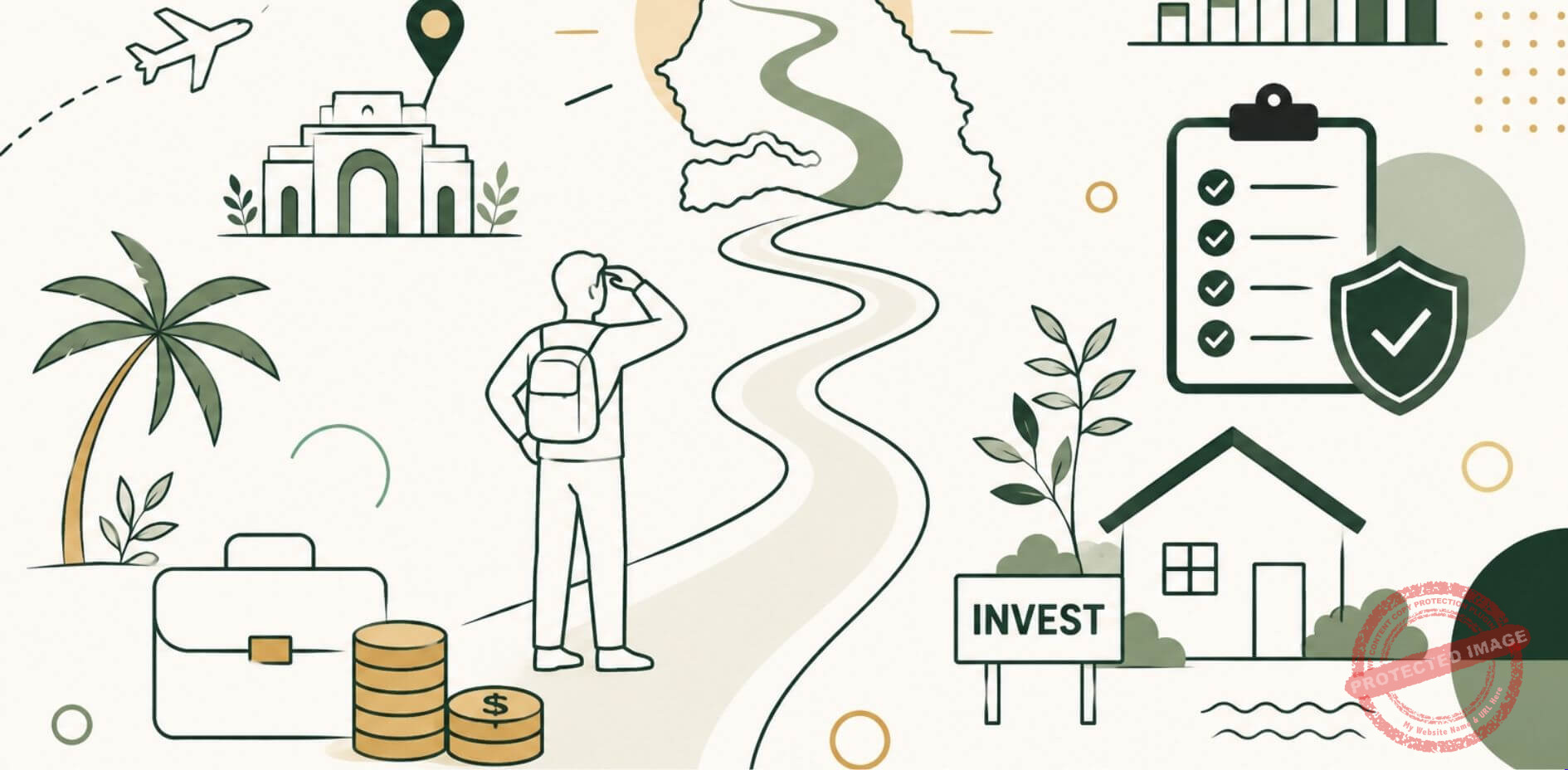


Sometimes, he already knows what kind of opportunity he is looking for: a restaurant, property, a farm, a hotel, transportation services, or even just land that he thinks will be worth a lot of money someday.
Then comes the question: “Zill, what do you think?”
Over the years, I have spoken with many people who were interested in The Gambia. I have advised them, introduced them to other people and even helped some of them come to The Gambia to look for investment opportunities.
Over time, I found out a few things. The truth is that people rarely struggle to find an opportunity. The actual struggle usually comes before that: they simply do not know how to formulate the right questions.
This is where most investment mistakes begin.
Therefore, every time someone tells me that he wants to invest in The Gambia, there are seven things I believe he should know before doing anything else.
This is always my first suggestion: visit.
Do not invest thousands of dollars in The Gambia based only on pictures that friends have sent you on WhatsApp. Do not buy land simply because somebody told you, “This place will soon become very expensive.” Also, do not form your impression of The Gambia solely from information you find on Facebook, TikTok and YouTube.
Just come here. Walk around. Meet people. Visit different communities. Go beyond the places tourists normally visit.
If you are interested in property, visit different communities. If you are interested in agriculture, visit farms. If you are thinking about tourism, speak with people in the tourism sector. If you are going to start a restaurant, go into restaurants and observe.
What kind of people eat there? What do they order? How much do they pay? What are the busiest times?
One week on the ground may give you much more information about the country than six months of discussion from afar.
There is also an additional advantage: you may come to The Gambia looking for one kind of investment and discover something completely different.
Now comes the fun part.
Think of someone who has been living in New York for the past twenty years. He knows how customers in New York behave. He knows the prices in America. He knows how customers travel and buy services.
Then he goes to The Gambia and notices something that is not available there. Straightaway, he thinks, “This business works in America. I can replicate it here.”
Possibly. However, one question remains unanswered: is the Gambian customer going to pay for it?
This one question can save you a lot of money.
A good business idea in America, Britain or Europe does not automatically mean it will be a good business idea in The Gambia. The customer could be very different, with different income levels, buying behaviour, infrastructure and even reasons for buying a product or service.
You can still replicate the idea, but you might have to change the price, the product or the business model.
So, do not fall in love with your idea before you know your customer.
The Gambia is a small country. Relationships matter. There are faces behind names, and a good introduction opens doors. This is one of the advantages of operating in a smaller marketplace.
However, there is one mistake investors make: they equate trust with verification. These two concepts are different.
Someone can be your friend. Someone can be your relative. Someone can have authority. It is still necessary to verify whether all required documents have been prepared and all agreements are understood.
It is essential to know where your money goes. All of this becomes even more important when working in an international environment. Distance has a way of turning small mistakes into large expenses.
While relationships will help you create a business, systems will be needed to protect it.
Property is among the first subjects raised by diaspora and foreign investors who approach me. I can see why.
You can touch the land. You can construct on it. You can use it in the future. You can rent out property. You can develop it.
There is only one phrase I would tell anyone interested in property in The Gambia: never let excitement outrun investigation.
An attractive plot of land may seem like an investment opportunity. The price may be quite reasonable, and the location may be perfect. But before making any payment, stop and think:
These may be quite boring questions. Ask them anyway.
Investigation is always easier than settling a conflict.
Some people come with big dreams. That is fine with me. Africa needs dreamers.
However, dreamers are not necessarily starters.
Let us assume that you have $100,000 to invest. Having $100,000 does not necessarily mean that your starting investment must also be $100,000.
Your start can be an educational programme. You can begin small and observe what happens.
Observe customer behaviour. Observe employee behaviour. Observe supplier behaviour. Observe how taxes, licences, banks, payments and transport work. See how long it takes to do things.
It might take one day to do something, while another thing might take one month. Then, you can grow bigger.
There is a difference between being scared to invest and being patient enough to learn about your market environment.
This is perhaps one of the greatest lessons I have learnt since becoming an entrepreneur.
When people ask, “Which business shall I go into in The Gambia?”, most will look at existing businesses. They see restaurants, apartments, taxis and retail stores, and they consider starting another one.
I am more inclined to ask a slightly different question: what problem do people continue to grumble about?
That question may lead you somewhere exciting.
Perhaps tourists have a problem. Perhaps property owners living abroad have a problem. Perhaps hotels have a problem. Perhaps farmers have a problem. Perhaps small businesses have a problem. Perhaps people need delivery services, maintenance services, technology, storage, transport or professional services.
Pay close attention to people’s complaints. At times, a complaint is just that—a complaint. At other times, it could be a business idea lying dormant until someone pays attention to it.
The next great business venture might not even be the one being talked about. It might be the problem that everyone is putting up with.
It is all about the money. No business can continue without cash flow.
However, whenever I consider the issue of investing in The Gambia, particularly diaspora investment, I believe there is one more question we need to ask: what is the aftermath of this investment?
Does the investment create jobs? Does it provide training for young people? Does it improve a service? Does it contribute to tourism development? Does it help another Gambian business grow? Does it bring technology?
In other words, investment has a dimension beyond profit-making.
Just imagine a Gambian who returns from abroad and starts a business that employs 20 people. Those 20 people will influence 20 households. They will buy things from other companies. Some of them will acquire new skills, and some may establish their own businesses one day.
There is a dimension of investment that goes beyond the initial investor.
When I talk to people from other countries about The Gambia, I always notice one thing: many people need a link to the country.
For diaspora Gambians, it can be an emotional one. It is their homeland.
For foreigners, it can be quite different. They may have visited the country before. They may have fallen in love with the climate. They may have loved the local people. They may have come for a holiday and started thinking about what it would be like to spend more time there.
What happens next?
They start asking questions:
This point is very important because holidaymakers can develop into more than tourists. Tourists may start coming regularly. Regular visitors may want to become residents of the country. Sometimes, residents will want to become investors.
However, investment must begin not with enthusiasm, but with knowledge.
Come and see. Ask questions. Speak with locals. Learn about the market. Check all the data meticulously. Work at a level at which you can gain information. Look closely at the problems that people have stopped paying attention to.
There may be opportunities there. You just have to see them.
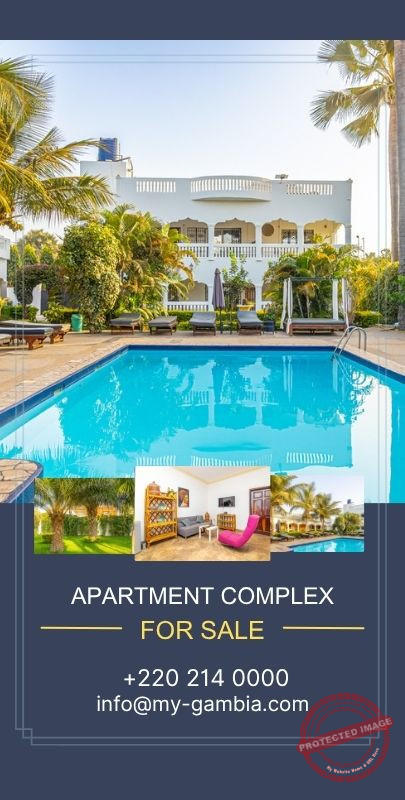
Ready to sell your holiday home or investment property?
Feature it on the leading platform promoting Destination Gambia and connect with serious local and international buyers.
WhatsApp: +220 214 0000 or +220 214 0001 or +220 214 0002
E-mail: info@my-gambia.com



Did you enjoy this article? Share it with friends >>>


 PREV
PREV





Typically replies within 30 minutes
We will be back soon.


